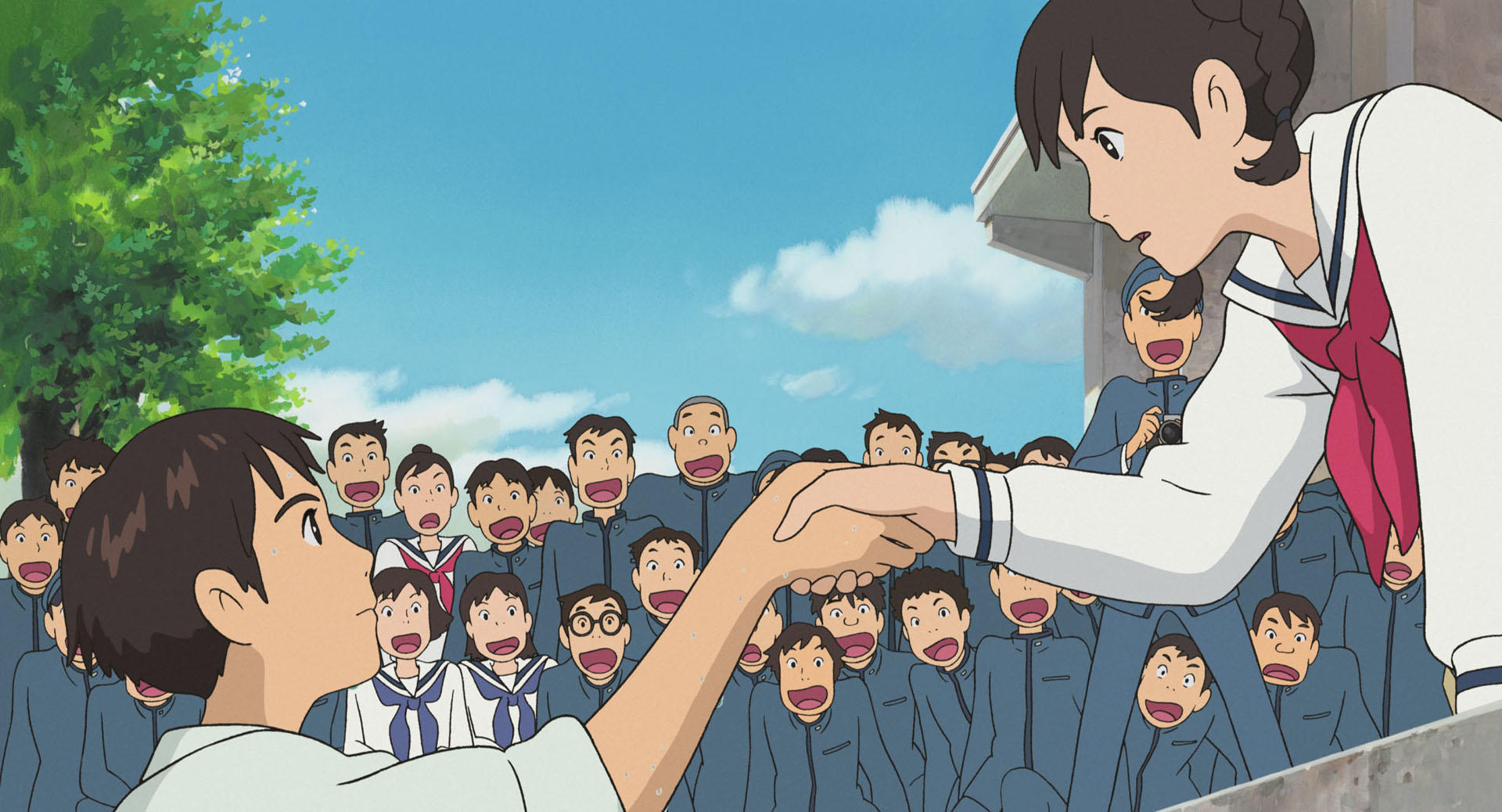
Still from ‘From Up on Poppy Hill’, Credits: Studio Ghibli
Studio Ghibli has a knack for crafting heartwarming stories that leave a lasting impression, and From Up on Poppy Hill is no exception. Directed by Gorō Miyazaki, with Hayao Miyazaki contributing to the screenplay, this 2011 gem takes us back to 1960s Yokohama, Japan. It’s a film about love, family, and preserving history in a time of change. While it might not feature fantastical creatures or magical worlds like some of Ghibli’s other hits, it delivers a deeply human story that’s just as enchanting.
Let’s break down what makes this film a must-watch for anime fans and anyone who appreciates a heartfelt story.
The Plot: A Slice of Life with a Dash of Mystery
Set in the early 1960s, a period marked by post-war recovery and modernization, From Up on Poppy Hill centers around Umi Matsuzaki, a diligent high school girl who manages her family’s boarding house while her mother is away. Every morning, Umi raises signal flags to honor her father, who was lost at sea during the Korean War. Her life takes an interesting turn when she meets Shun Kazama, a charismatic schoolmate involved in saving their school’s clubhouse from demolition.
The story intertwines the budding romance between Umi and Shun with a surprising twist about their family histories. It’s a tale that’s as much about personal connections as it is about preserving the past, making it a thoughtful commentary on heritage and progress.

The Setting: A Love Letter to 1960s Japan
The attention to detail in From Up on Poppy Hill is breathtaking. The film beautifully captures the atmosphere of 1960s Yokohama, from the bustling harbor to the serene hillside neighborhoods. The visuals are steeped in nostalgia, with traditional Japanese houses, vintage advertisements, and everyday life meticulously brought to life.
The school’s Latin Quarter, a quirky and chaotic clubhouse filled with various student clubs, is a standout setting. It’s a microcosm of youthful energy and passion, contrasting with the more subdued and tranquil world of Umi’s boarding house. The film’s visuals don’t just set the scene; they transport you into the era, making you feel like you’re part of the story.
The Characters: Relatable and Endearing
One of the film’s greatest strengths is its characters. Umi is a wonderfully relatable protagonist. She’s responsible, kind, and quietly strong, juggling her responsibilities while navigating the complexities of teenage life. Shun, with his idealistic and slightly rebellious streak, complements her perfectly.
The supporting cast is equally charming. From the quirky students in the Latin Quarter to Umi’s family members, each character adds depth and warmth to the story. Even minor characters leave an impression, thanks to Ghibli’s knack for giving everyone a sense of individuality.
Themes: Love, Loss, and Moving Forward
At its core, From Up on Poppy Hill is a story about connection. It explores themes of love and loss, not just in a romantic sense but also in terms of family and community. Umi’s dedication to her late father, expressed through her daily ritual of raising the flags, is deeply touching and speaks to the universal desire to honor loved ones.
The film also delves into the tension between preserving the past and embracing the future. The battle to save the Latin Quarter symbolizes the struggle to hold onto traditions and history in the face of rapid modernization. It’s a theme that resonates universally, making the film’s message timeless.
The Animation: A Feast for the Eyes
Studio Ghibli is synonymous with stunning animation, and From Up on Poppy Hill is no exception. The film’s hand-drawn style is rich with detail and warmth. Whether it’s the glistening waters of the harbor, the cozy interiors of the boarding house, or the chaotic charm of the Latin Quarter, every frame is a work of art.
The use of light and color is particularly striking. Soft, warm hues dominate the palette, enhancing the nostalgic feel of the film. The animation isn’t just visually appealing; it’s emotionally evocative, drawing you deeper into the story.

The Soundtrack: Music That Tugs at Your Heartstrings
The film’s music, composed by Satoshi Takebe, is the perfect companion to its visuals. The soundtrack combines traditional Japanese melodies with Western influences, reflecting the cultural blend of the era. The opening theme, “Summertime,” sets a wistful tone that lingers throughout the film.
One of the standout pieces is the song “Sayonara no Natsu” (“Summer of Farewells”), performed by Aoi Teshima. Its gentle, melancholic melody encapsulates the film’s bittersweet emotions and will likely stay with you long after the credits roll.
Some Fun Facts: Behind the Scenes
- Father-Son Collaboration: This film marked the second collaboration between Hayao Miyazaki and his son Gorō Miyazaki. While their working relationship has been famously complex, the result here is a testament to their combined storytelling prowess.
- Historical Inspiration: The film’s story was inspired by a manga of the same name, written by Tetsurō Sayama and illustrated by Chizuru Takahashi.
- Attention to Detail: The Latin Quarter was modeled after real Japanese school clubhouses from the 1960s. Ghibli’s team even consulted architects to ensure authenticity.
Why You Should Watch ‘From Up on Poppy Hill’…
If you’re a fan of Studio Ghibli’s more grounded, slice-of-life films like Whisper of the Heart or Only Yesterday, you’ll adore From Up on Poppy Hill. It’s a heartfelt story that’s as much about the beauty of everyday life as it is about the larger themes of love and legacy.
This film is a refreshing break from high-octane action or fantasy-driven plots. It invites you to slow down, appreciate the little things, and reflect on what truly matters. The characters are relatable, the visuals are stunning, and the story is a perfect blend of sweet and poignant.
Whether you’re a longtime Ghibli fan or new to the studio’s magic, From Up on Poppy Hill deserves a spot on your watchlist. So grab some popcorn, settle in, and let this nostalgic journey transport you to a simpler, yet deeply meaningful, time.
That’s all for today, thanks for stopping by! Check out another blog here:
Howl’s Moving Castle (2004): In the Magical World of Howl and Sophie
Studio Ghibli’s Howl’s Moving Castle is a magical journey blending stunning visuals, memorable characters, and thought-provoking themes. Directed by Hayao Miyazaki and loosely based on Diana Wynne Jones’ novel, this film is a masterpiece of animation and storytelling. Join us as we explore what makes this movie an enduring classic.

Share this:

Discover more from Joy of Untangling
Subscribe to get the latest posts sent to your email.


