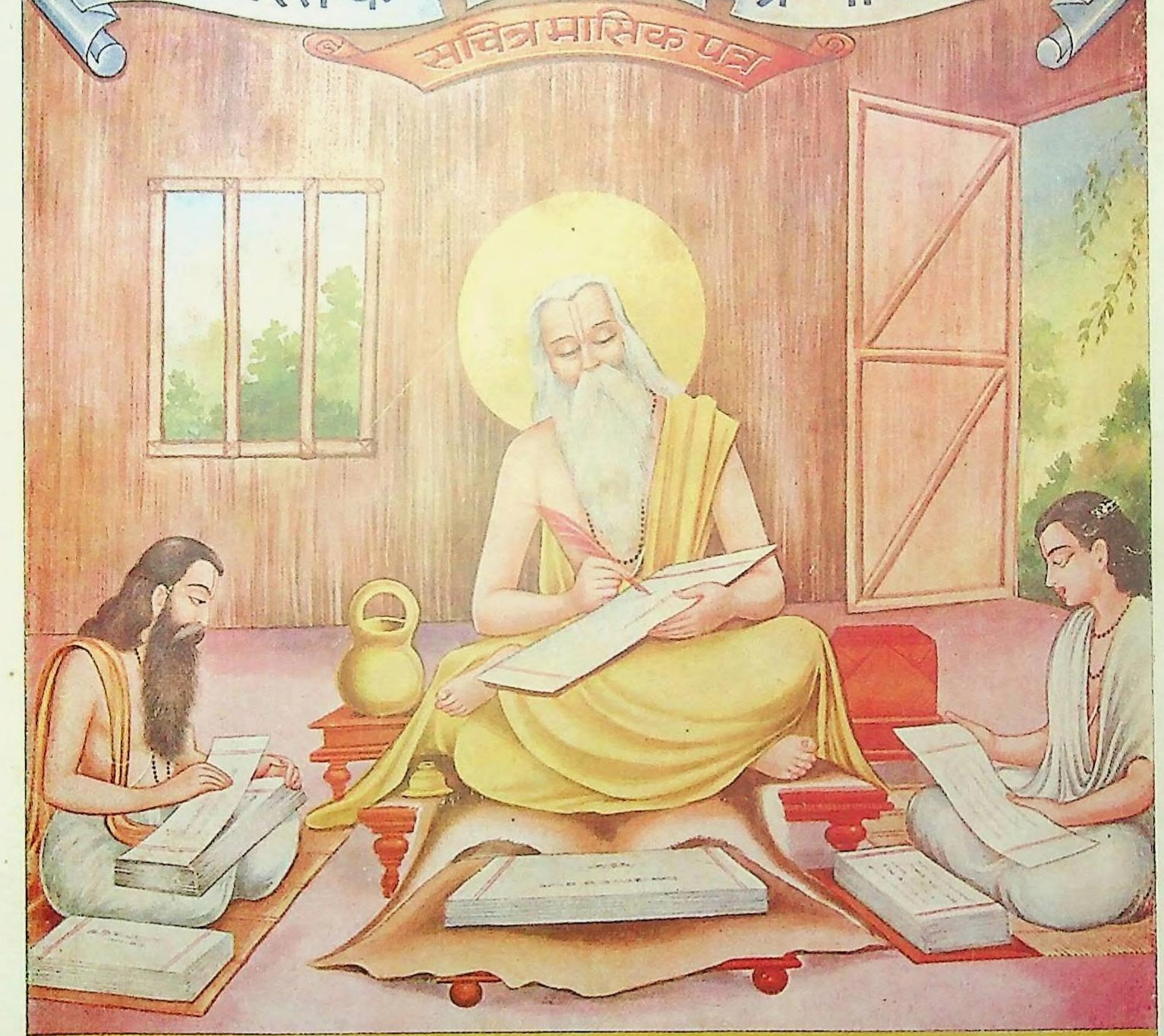
Credit: Thumbnail Image by Gita Press Gorakhpur, License: CC0
My Humble Mission
The Mahabharata wasn’t just a bedtime story in my childhood – it was a symphony woven from my grandmother and mother’s voices. Short tales of epic battles and righteous heroes filled my early years, further fueled by the fantastical tales on the small screen. Fast forward to my techie life, and while chatting with colleagues, a gap emerged. Many young adults, to my surprise, were completely unfamiliar with this great Indian epic.
Back then, I sheepishly admitted I hadn’t done much to bridge that gap myself. But a spark ignited when I discovered Bibek Debroy’s monumental 10-volume translation. Sure, it was intimidating at first, but I began with a strategy – a few pages a day, a steady pace to devour this literary titan. After all, no movie or series can truly capture the Mahabharata’s breathtaking complexity and depth. So, here I am, embarking on a humble mission: to share, one volume at a time, this timeless tale, arguably one of humanity’s greatest stories.
The Mahabharata
The Mahabharata is an epic poem from ancient India, considered one of the longest poems ever written. It’s like a massive collection of stories, filled with adventure, war, romance, and philosophy.
Imagine a massive family drama with kingdoms, divine interventions, and powerful warriors. Here’s a quick breakdown:
- Central Conflict: Two branches of the Kuru clan, the Pandavas and the Kauravas, clash over the throne of Hastinapura.
- Key Characters:
- Pandavas (Sons of King Pandu): Five righteous brothers known for their virtues and struggle for justice.
- Kauravas (Descendants of King Kuru, sons of King Dhritarashtra): The jealous cousins, with the eldest son, ambitious Duryodhana, at the forefront.
Technically, the Pandavas too, are descendants of King Kuru but the 100 sons of Dhritarashtra are referred to as the Kauravas more often. - Krishna: An embodiment of dharma (righteousness) who plays a crucial role.
- The Epic Battle of Kurukshetra: The main story revolves around the Kurukshetra war, a massive conflict between the Pandavas and Kauravas, with far-reaching consequences.
- Beyond the War: The Mahabharata delves into themes of duty, love, loss, and the complexities of life. It offers valuable lessons and insights, relevant even today.
About the Translator
Bibek Debroy, a renowned economist, translator, and scholar, has undertaken the monumental task of translating the revered Indian epic, the Mahabharata, into English. This review delves into the first volume of the ten-part series, offering a glimpse into the ancient tale’s richness and significance.
The Mahabharata, Volume 1 at a Glance:
The Mahabharata, volume 1 sets the stage for the epic saga. It delves into the lineage of the Kuru clan, tracing their ancestry back to the gods. We encounter the pivotal snake sacrifice of King Janamejaya, the catalyst for the recitation of the Mahabharata by the sage Vyasa. The volume introduces us to the main characters: the virtuous Pandavas and the ambitious Kauravas, cousins destined for a devastating conflict over for the throne of Hastinapura.
Let’s talk about some of the beautiful short stories from Volume 1 of Bibek Debroy’s translation of the Mahabharata:
1. Rise of Ganga-putra Bhishma (Adi Parva, Chitraāngada Parva)
Credits: Image by Bamapada Banerjee, License: Public Domain

King Shantanu, captivated by the beauty of the river goddess Ganga, proposed marriage. Ganga agreed, but with a chilling condition: the king must never question her actions, or she would leave. Blinded by love, Shantanu readily agreed. Their union, however, was shrouded in tragedy. Ganga bore him sons, only to drown them each time soon after birth. Shantanu’s love battled with growing unease. Finally, upon the birth of their eighth son, Bhishma, he could bear it no longer. Breaking his vow, he confronted Ganga, demanding an explanation for her horrific actions.
Her icy demeanor softened as Ganga revealed a celestial curse. The eight Vasus, cursed by a powerful sage for stealing a divine cow, were destined to be reborn as mortals and face their punishment. Bhishma, the leader of the Vasus, would bear the brunt of the suffering and needed a longer lifespan. Understanding dawned on Shantanu. Ganga, bound by her duty to fulfill the curse, left with a promise to return Bhishma after raising him. Bhishma, entrusted to her care, grew up in celestial realms, honing his skills under renowned sages. Years later, at Shantanu’s pleading, Ganga returned a formidable warrior – Bhishma, destined to become the protector of the kingdom.
2. Origin of the Pandavas (Adi Parva, Vaivasvata Manu Parva)
Pandu, though younger, ascended the Kuru throne thanks to his elder brother Dhritarashtra’s blindness. Yet, fate dealt a cruel hand. While hunting, Pandu unknowingly unleashed a deadly arrow, mistaking a pair of deer for prey. The “deer” turned out to be a powerful sage Kindama in disguise, enraged by the interruption of his intimate moment. In his final breath, the sage unleashed a terrible curse: any attempt at intimacy with his wives would be Pandu’s undoing. This unexpected twist shattered Pandu’s dreams of fatherhood and cast a shadow over the future of the Kuru dynasty.
Credits: Image By Raja Ravi Varma, License: Public Domain

Faced with the harsh curse, Pandu relinquished the throne, leaving Dhritarashtra as king. The burden of the crown, however, couldn’t erase the yearning for a family. Luckily, Kunti held a secret weapon: a pre-marital boon allowing her to call upon any god for a son. Seizing this chance, Pandu used Kunti’s power three times. Each time, a divine answered, blessing them with a son. These weren’t ordinary children; they were the Pandavas, each born with the essence of a powerful deity flowing through their veins
Yudhishthira, the embodiment of righteousness,
Bhima, with the strength of the wind god himself, and
Arjuna, destined for greatness with the blood of the king of gods.
But Pandu wasn’t done. Yearning for more children, and wanting Madri to experience motherhood, he convinced Kunti to share her boon. With a heavy heart, but understanding, Kunti did. Madri, blessed by the divine Ashwini twins, the gods of health and medicine, gave birth to twins –
Nakula, famed for his handsomeness and horsemanship, and
Sahadeva, the master strategist with unparalleled knowledge of the stars.
Thus, the Pandava brothers, five in all, were born, each carrying the promise of extraordinary destinies.
3. Kunti’s First-born, Karna (Adi Parva, Vaiśvamedhika Parva):
Credits: Image by Unknown Artist, License Public Domain

Imagine a fiery young princess named Pritha (later known as Kunti) living in a grand palace. One day, a powerful sage named Durvasa stayed at the palace. Pritha, ever the helpful soul, ensured his every comfort. Pleased by her attentiveness, Durvasa gifted her a magical chant – a secret weapon to summon any god and have a son!
Teenage curiosity got the better of Pritha. What if the chant really worked? So, one sunrise, she took a deep breath and chanted the magic words. Suddenly, the dazzling Sun God Surya appeared, radiating warmth and light! Before she knew it, Pritha had a son – a gift that came with a hefty dose of fear. Unmarried with a child, she worried about gossip and bringing shame to her family.
With a heavy heart, Pritha placed the precious child in a basket, setting it afloat on a gentle river, whispering a prayer for his safety.
4. Draupadi’s Svayamvara (Draupadi Svayamvara Parva):
Credits: Image by Unknown author, License Public Domain

King Drupada, seeking revenge against his childhood friend Drona who claimed half his kingdom based on a pact, performed a fire sacrifice to obtain a powerful son. From the holy fire emerged not one, but two beings: Dhrishtadyumna, a youth, and Krishnaa (also known as Draupadi).
King throws a grand competition – a Svayamvara – for his daughter Draupadi’s hand. Princes flock to the challenge: string a bow and hit a fish’s eye… by looking at its reflection! Disguised as Brahmins, the Pandavas arrive to the palace. One by one, mighty warriors fail. Arjuna, ever the skilled archer, nails the shot. But wait! Chaos erupts as rivals protest a Brahmin winning. A thrilling fight ensues, with Bhima and Arjuna protecting Draupadi.
Back home, Arjuna excitedly announces their “prize” to Kunti. In a fateful misunderstanding, she insists they share it – leading to the shocking revelation: all five Pandavas will marry Draupadi! This unique polyandry pact comes with a rule: no brother interrupts another’s time with Draupadi, or face exile.
5. The Lakshagriha Incident (Jatugriha-daha Parva):
Credits: Image by Mughal Artist – From razmnama, License CC BY-SA 4.0

Duryodhana, desperate to secure the throne, hatched a plot as hot-headed as himself. He tricked the Pandavas into visiting a supposedly magnificent palace, built entirely of flammable materials. It was a death trap disguised as a royal invitation!
Luckily, the eldest Pandava, Yudhishthira, harbored suspicions about the motives behind the invitation. Their wise and loyal uncle, Vidura, secretly tipped them off about the plot. He even arranged for a skilled miner to dig a hidden escape tunnel right under the palace, all without anyone suspecting a thing!
While the Pandavas played along, pretending to be impressed by the flammable firetrap, the tunnel was slowly taking shape. Finally, after a year of living on eggshells, Yudhishthira saw his chance. He threw a grand party within the palace, inviting the entire town. Once everyone was good and tipsy, including the architect who built the death trap, Yudhishthira gave the signal.
With a mighty roar, Bhima, the strongest Pandava, set the palace ablaze! As the palace burned, they slipped away through the hidden tunnel, their mother, Kunti, safely by their side. Vidura, ever the mastermind, even arranged for a boatman to whisk them away to safety, leaving only ashes and confusion behind.
Duryodhana, convinced his plan had worked, celebrated the “death” of his rivals. The townspeople, fooled by the burning palace and some unfortunate mistaken identities, believed the Pandavas were no more. Little did they know, the Pandavas were alive and well, ready to fight for their rightful place on the throne.
The escape from the flaming palace was just the beginning of their epic journey!
6. The Snake Sacrifice and Birth of Astika (Astika Parva)
Credit: Image by Unknown artist – Sourced from eBay, Nov 2006, License: Public Domain

In the Astika Parva of the Mahabharata, there’s a fascinating story about the birth of Astika himself. Astika was born to the sage Jaratkaru and his wife Jaratkaru, who was the sister of Vasuki, the king of serpents (Nagas).
Once, King Janamejaya decided to perform a great snake sacrifice to avenge his father’s death caused by a serpent bite. During this sacrifice, thousands of snakes were being consumed in the sacrificial fire. The Nagas were terrified and sought protection from their sister Jaratkaru. She approached her husband, the sage Jaratkaru, who was deep in meditation and unaware of worldly matters. Upon hearing her plea and learning of the plight of the Nagas, he agreed to father a son who would save them.
Jaratkaru then performed severe penance to please Lord Brahma, who granted him a boon. Jaratkaru requested Brahma to bless him with a son who would protect the Nagas. Brahma agreed, and Astika was born. Astika grew up to be a wise and compassionate sage who intervened during the snake sacrifice, persuading King Janamejaya to stop the massacre of the Nagas.
7. Bhima’s Encounter with Hidimba (Hidimba Vadha Parva):
Credit: Image by Unknown artist, License: Public Domain

After escaping the burning house of lac in Varanavata, the Pandavas, along with their mother Kunti, wandered through the forest. One night, they took refuge under a tree to rest. Unknown to them, the forest was inhabited by the powerful rakshasa (demon) Hidimba.
Hidimba had a sister named Hidimbi, who was also a rakshasi. As the Pandavas slept, Hidimba smelled the scent of humans and ordered his sister to find them and bring them to him so he could feast on them. Hidimbi, however, was captivated by Bhima’s strength and handsome appearance. When she saw him, she was instantly smitten.
Transforming herself into a beautiful woman, Hidimbi approached Bhima and warned him about the danger posed by her brother. She confessed her love for Bhima and asked him to save himself and his family. Bhima, confident in his strength, assured her that he could handle Hidimba.
When Hidimba discovered that his sister had fallen for Bhima and warned the Pandavas, he was furious. A fierce battle ensued between Hidimba and Bhima. After a brutal fight, Bhima, with his immense strength, managed to overpower and kill Hidimba, thereby saving his family.
Following Hidimba’s death, Hidimbi expressed her desire to marry Bhima. With Kunti’s approval, Bhima agreed to marry her on the condition that he would leave her after they had a son. In due course, Hidimbi bore Bhima a son named Ghatotkacha, who would later become a significant warrior in the great war.
This story from the Hidimba Vadha Parva highlights Bhima’s bravery and strength, as well as the unique and compassionate relationship between a human and a rakshasi.
8. Arjuna’s Encounter with Chitrasena (Chitraratha Parva):
After leaving the kingdom of Panchal, where Draupadi had been won as a bride by Arjuna, the Pandavas, along with Draupadi, continued their journey. One day, they arrived at the banks of the river Ganga. The area was beautiful and enchanting, known as Chaitraratha, the garden of the gandharva Chitrasena.
The Pandavas decided to rest and bathe in the river. As they were enjoying their time, the gandharva Chitrasena arrived with his retinue. Seeing the Pandavas in his territory, Chitrasena was angered and challenged them. A fierce battle ensued between the gandharva and the Pandavas. Despite their best efforts, the Pandavas were unable to match the strength and magical prowess of Chitrasena.
Arjuna then stepped forward, wielding his celestial weapons and using his knowledge of divine warfare. A great duel took place, but Chitrasena, realizing Arjuna’s formidable skills and divine weapons, decided to reveal his true identity and purpose. He told Arjuna that he was a friend of Indra, the king of the gods and Arjuna’s divine father.
Chitrasena explained that he had come to test Arjuna’s abilities and to teach the Pandavas a lesson in humility. He also informed them about the importance of respecting other beings and their territories. Understanding the wisdom in Chitrasena’s words, the Pandavas accepted his guidance and made peace with him.
This encounter not only showcased Arjuna’s exceptional warrior skills but also highlighted themes of respect, humility, and the importance of understanding and respecting the powers and domains of other beings.
9. Vidura’s Diplomatic Mission to the Pandavas (Viduragamana Parva)
Credit: Image by Unknown artist – Bhagvadgitagianu, License: Public Domain

After the Pandavas had miraculously escaped the fiery Lakshagriha palace, they were back in the spotlight, thanks to Arjuna winning the stunning Draupadi at her Swayamvara. Duryodhana and Karna must have felt like wounded lions – surprised, envious, and fuming! The thought of the Pandavas returning and claiming their rightful place on the throne was enough to make them plot like villains in a bad play.
Meanwhile, King Dhritarashtra’s wise brother, Vidura, was ecstatic about the Pandavas’ reappearance. He, along with Drona and Gandhari, pushed for a peaceful solution – send lavish gifts, mend fences, and bring the Pandavas home. Duryodhana and Karna, however, were not happy with this reconciliation. Their solution? More plotting, more schemes, anything to keep those Pandavas away!
Thankfully, King Dhritarashtra wasn’t completely blind (figuratively speaking, of course). He saw the logic in patching things up and sent Vidura, loaded with gifts, to King Drupada’s court. The mission: bring the Pandavas, their mother Kunti, and the beautiful Draupadi back to Hastinapura.
Will this olive branch work? Or will Duryodhana and Karna manage to ignite another firestorm? That’s a story for another day!
10. A Flaming Deal of Khandavaprastha (Rajyalabha Parva) :
King Dhritarashtra, facing pressure to give the Pandavas their rightful share of the kingdom, hatches a plan – a seemingly generous one, at least at first. He offers them Khandavaprastha, a desolate forest rumored to be haunted by demons and practically unlivable.
Now, most people would scoff at such an offer. But the Pandavas, ever resourceful, saw an opportunity. They knew this forest was also home to Agni, the fire god, who desperately wanted to cleanse the area. With Krishna’s help, they struck a deal with Agni: the Pandavas would clear the forest by burning it down, and Agni would consume everything except the valuable herbs and timber Krishna would point out.
It was a win-win situation! Agni got his cleansing fire, and the Pandavas transformed the charred wasteland into a magnificent kingdom – Indraprastha.
Here’s the twist: this “gift” from Dhritarashtra wasn’t quite as generous as it seemed. He likely anticipated the Pandavas failing to tame the wild forest. But their cleverness and Krishna’s intervention not only secured them a kingdom but also showcased their potential as rulers. This act further fueled the jealousy of Duryodhana and Karna, setting the stage for future conflicts.
Final Thoughts
This is just a glimpse into the epic world of the Mahabharata, specifically the first volume translated by the amazing Bibek Debroy. His clear and engaging writing makes this ancient tale accessible to anyone. But remember, the Mahabharata is so much more than just the Pandavas and Kauravas! It’s a sprawling story packed with fascinating side plots, each one a treasure waiting to be discovered.
Think of it this way: reading the book is like diving into a rich tapestry compared to a blurry TV adaptation or a friend’s watered-down version. You’ll get all the details, the depth, the emotions – the full Mahabharata experience! So, why not give it a shot? You might just be surprised by how much you enjoy this incredible adventure.
Share this:

Discover more from Joy of Untangling
Subscribe to get the latest posts sent to your email.


